How to Rebuild a Relationship After Addiction: Why Sobriety Is Only the First Step
How to Rebuild a Relationship After Addiction: Why Sobriety Is Only the First Step
In the last month, have you asked Google, Claude, or ChatGPT:
- “How do I rebuild trust after addiction?”
- “Can my marriage survive addiction?”
- “How does addiction affect relationships?”
- “Why am I still resentful now that my partner is sober?”
- “How do we restore intimacy after addiction?”
If you have, you are probably confronting a painful reality that many couples in recovery never expect: ending the addictive behavior does not automatically repair the relationship it injured.
Sobriety matters. Stabilization matters. Treatment can save a life. But the end of substance use is often the beginning—not the completion—of relational recovery.
Many traditional addiction programs primarily focus on stabilizing the person with a substance use disorder, reducing immediate harm, supporting abstinence or recovery goals, and preventing relapse. Those objectives are essential. However, the relationship may still be carrying years of secrecy, emotional abandonment, broken agreements, financial instability, hypervigilance, resentment, and lost intimacy.
That is why so many couples eventually ask: “We survived the addiction. How do we rebuild our marriage now?”

Addiction Can Become an Energetic Affair
I often describe active addiction as an energetic affair.
An affair does not only redirect physical or sexual energy outside a relationship. It redirects the attention, time, loyalty, emotional presence, money, and protective care that a partnership needs to survive.
Addiction can create a similar relational triangle:
Partner One + Partner Two + the addiction.
The substance or compulsive behavior begins consuming resources that once belonged to the relationship. Plans revolve around using, hiding, recovering, monitoring, confronting, rescuing, or preventing the next crisis. One partner may become increasingly absent while the other becomes increasingly vigilant.
The addiction becomes an energy parasite within the relationship. It consumes more and more while returning nothing that creates safety, trust, or connection.
The partner living with active addiction may feel controlled, ashamed, or misunderstood. The other partner may feel abandoned, deceived, financially unsafe, emotionally alone, or forced into the role of investigator, parent, protector, or crisis manager.
Eventually, very little energy remains for friendship, play, affection, erotic connection, shared dreams, or romance.
How Does Addiction Affect Romantic Relationships?
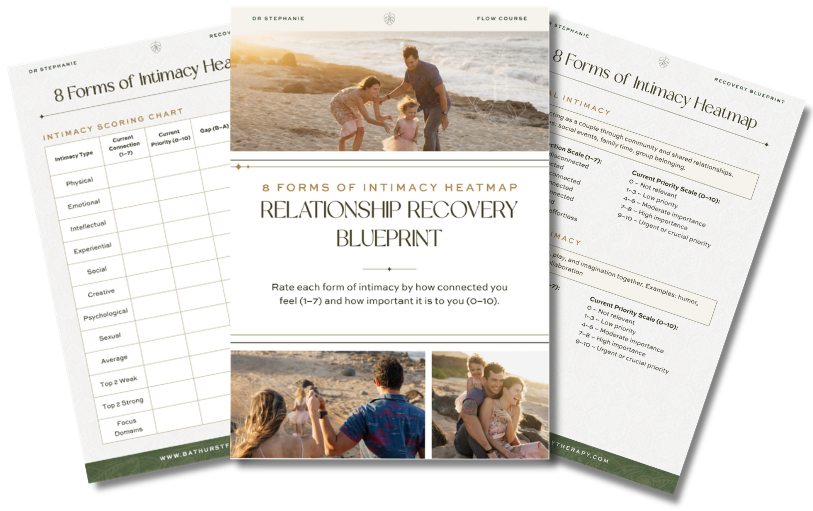
Addiction can affect nearly every form of intimacy within a relationship:
- Emotional intimacy: Partners may stop sharing honestly because conversations lead to denial, shame, conflict, or fear.
- Psychological intimacy: The relationship no longer feels mentally or emotionally safe.
- Physical and sexual intimacy: Desire may decline because of disconnection, physiological effects, resentment, or unresolved relational trauma.
- Experiential intimacy: Shared experiences become disrupted by intoxication, withdrawal, secrecy, unreliability, or recovery from use.
- Financial intimacy: Money may be hidden, redirected, lost, or used without mutual consent.
- Social intimacy: Couples may isolate themselves to conceal the problem or avoid embarrassment.
- Trust: Promises repeatedly conflict with behavior, teaching the hurt partner that words alone are no longer dependable.
This is why a partner can genuinely celebrate someone’s recovery and still feel angry, guarded, sexually disconnected, or unable to trust them.
The nervous system does not interpret sobriety as proof that every danger has passed. It looks for repeated experiences of honesty, predictability, accountability, and emotional availability.
Is Couples Therapy Effective When Addiction Is Still Active?
The most accurate answer is: the type and timing of therapy matter.
General romance-focused couples therapy cannot substitute for substance use disorder treatment. If substance use is creating intoxication, withdrawal, medical risk, impaired judgment, violence, coercion, or repeated deception, the immediate priorities are safety, appropriate addiction care, and stabilization.
However, it would be inaccurate to say that every form of couples therapy is statistically ineffective during active addiction. Research on specialized Behavioral Couples Therapy for substance use disorders has found improvements in both substance-related outcomes and relationship functioning compared with individual treatment alone. This model directly incorporates recovery agreements, accountability, and partner support into addiction treatment; it is not simply traditional marriage counseling conducted while the addictive pattern continues unchecked. Research review: Behavioral Couples Therapy for Alcoholism and Drug Abuse
The better principle is:
Stabilize the threat first, then begin deeper romantic repair—but involve an addiction-trained couples specialist earlier when clinically appropriate.
Stabilization does not have to mean that life is perfect or that every risk of relapse has disappeared. It means the couple has enough safety, honesty, clinical support, and behavioral consistency to do relational work without therapy being repeatedly overwhelmed by an uncontrolled crisis.
If abuse or coercive control is active, conjoint couples therapy may be unsafe or inappropriate. Safety planning and specialized individual intervention must take priority. Similarly, when an affair is ongoing, meaningful trust repair cannot begin while the outside relationship and continued deception remain active.
You cannot recontract a relationship while one partner is still actively violating the contract.
Is Addiction Genetic, Environmental, or Trauma-Based?
Addiction is not caused by one gene, one childhood experience, or one poor decision. Substance use disorders develop through a complex interaction of biological, psychological, developmental, and environmental influences.
The National Institute on Drug Abuse reports that genetic factors account for roughly half of a person’s risk for addiction, while environment, development, stress, early exposure, family influences, and experiences of abuse can also affect risk. Genetics influence vulnerability; they do not determine destiny. National Institute on Drug Abuse
Epigenetics adds another layer to this understanding. Epigenetic processes influence how environmental experiences can affect gene activity without changing the underlying DNA sequence. Researchers are studying how stress, trauma, substance exposure, and other environmental factors may influence biological pathways related to addiction. It is therefore more accurate to say that addiction is multifactorial and can involve epigenetic mechanisms, rather than describing addiction itself as exclusively epigenetic.
Trauma may also become interwoven with substance use. Some people use substances to escape intrusive memories, emotional pain, nervous-system activation, shame, or psychological distress. Substance use can then create additional trauma for the individual and their partner, forming a cycle in which pain fuels consumption and consumption creates more pain.
Understanding these influences creates compassion, but compassion does not eliminate accountability. A person can have a legitimate clinical disorder and still be responsible for participating honestly and consistently in treatment.
Why Sobriety Does Not Automatically Rebuild Trust
Trust is not restored by the sentence, “I stopped.”
It is restored through an accumulation of experiences that communicate:
- “I tell you the truth before you have to investigate.”
- “I follow through even when no one is watching.”
- “I can hear how my behavior affected you without making my shame the center of the conversation.”
- “I respect the boundaries our relationship now requires.”
- “I remain emotionally present when your fear or grief resurfaces.”
The partner in recovery may understandably want the relationship to move forward. The hurt partner’s nervous system, however, may still be living inside earlier emergencies. A delayed text, unexplained expense, change in tone, or closed door can activate memories of previous deception.
This does not necessarily mean the hurt partner is unwilling to forgive. It may mean the body has not yet received enough consistent evidence that the environment is safe.
The Four Stages of Rebuilding a Relationship After Addiction
1. Stabilize the Addiction and Protect Immediate Safety
Establish an appropriate recovery plan with qualified addiction professionals. Depending on the substance and severity, abruptly stopping without medical supervision can be dangerous. Treatment may include medical care, medication, residential or outpatient services, individual therapy, recovery support, relapse-prevention planning, or a combination of services.
Relationship repair should never be used as a substitute for medical or addiction treatment.
2. Establish Transparency and Behavioral Accountability
The couple needs clearly defined agreements about substances, finances, communication, treatment participation, high-risk situations, and what will happen if a lapse or relapse occurs.
Transparency should create safety without turning one partner into a permanent police officer. The person in recovery must gradually assume responsibility for demonstrating reliability rather than requiring their partner to extract the truth.
3. Process the Relationship Injuries
Once adequate stability exists, the couple can address the emotional residue: resentment, betrayal, loneliness, fear, grief, sexual disconnection, and the roles each partner adopted to survive.
This stage cannot be rushed. The goal is not to force forgiveness or repeatedly prosecute the past. The goal is to understand what happened, validate its impact, process unresolved pain, and help both partners stop reliving the same injury through every new disagreement.
EMDR is an evidence-based treatment for PTSD and can help appropriate clients process traumatic memories under the care of a trained clinician. Its suitability must be assessed individually, especially when trauma and substance use overlap. U.S. Department of Veterans Affairs National Center for PTSD
4. Rebuild Romance and Create a New Relationship Contract
Recovery cannot only be about avoiding the next crisis. Couples also need experiences that make the relationship worth protecting.
This may include rebuilding affection, emotional responsiveness, erotic trust, shared routines, friendship, play, financial partnership, and future goals. The couple is not trying to recreate the exact relationship they had before addiction. They are creating a healthier relationship with new agreements, new skills, and a more intentional exchange of energy.
How My Couples Intimacy Retreat Supports Relationship Recovery
Many couples come to my retreats after spending years stabilizing the health of each partner. They have completed treatment, entered recovery, and developed stronger individual coping skills—but they still do not know how to feel like romantic partners again.
My private Couples Intimacy Retreat is not addiction detoxification or a substitute for substance use disorder treatment. It is an immersive relationship-repair experience for appropriately stabilized couples who are ready to address the relational injuries that remain.
Within my Resentment Repair process, I may integrate carefully assessed EMDR work to help partners process trauma-related memories and unresolved emotional pain. We then work toward healthier communication, renewed attachment, clearer relational agreements, trust-building behavior, nervous-system regulation, and the gradual restoration of emotional and physical intimacy.
The purpose is not to erase the past. It is to help the past stop consuming all the energy needed to create the relationship you want now.
Explore Private Couples Intimacy Retreats
Can a Marriage Survive Addiction?
Yes, a marriage can survive addiction, but sobriety alone cannot guarantee relational recovery.
The person in recovery cannot demand immediate trust because the addictive behavior has stopped. The hurt partner cannot be expected to forget years of instability simply because the current crisis has ended. Both partners need space to heal, but they do not carry identical responsibilities for the harm that occurred.
Successful recovery requires honesty, accountability, appropriate addiction care, emotional processing, new boundaries, and repeated experiences of safety. Specialized couples treatment can then help the relationship progress from surviving addiction to rebuilding connection.
Frequently Asked Questions About Addiction and Relationships
How long does it take to rebuild trust after addiction?
There is no universal timeline. Trust usually returns through consistent behavior over time, not through one apology, disclosure, or therapy session. The duration depends on the severity and length of the addiction, the injuries created, treatment participation, relapse history, transparency, and each partner’s capacity to process what happened.
Should I forgive my partner after addiction?
Forgiveness is a personal process, not a clinical requirement or deadline. Accountability, safety, and behavioral change should not depend on whether the hurt partner is ready to forgive.
Why am I still angry now that my partner is sober?
Your anger may reflect unresolved betrayal, grief, fear, exhaustion, or trauma from what happened during active addiction. Sobriety removes an ongoing source of harm, but it does not automatically process the pain already stored in the relationship.
Can intimacy return after addiction?
Yes, emotional and physical intimacy can return when both partners have adequate safety, consent, honesty, and willingness to rebuild. Intimacy should not be forced as proof of forgiveness or recovery.
What should we do if relapse occurs?
Respond according to a plan created with qualified addiction professionals. Prioritize medical safety, honesty, treatment re-engagement, and protection of partners or children. A relapse should be addressed directly, but it does not automatically erase all previous progress.
You Stabilized the Individual. Now It May Be Time to Heal the Relationship.
Traditional addiction treatment may help interrupt the destructive behavior and stabilize the individual. Relationship recovery asks a different set of questions:
- What happened to trust?
- What happened to romance?
- What happened to the partner who spent years surviving the unpredictability?
- What agreements do we need now?
- How do we create a relationship that feels safe enough for both people to become emotionally available again?
Once the energetic affair is no longer actively consuming the relationship, the couple can reclaim the time, attention, presence, and emotional energy needed to build something healthier.
If you have stabilized the addiction but still feel more like recovery partners, roommates, or crisis managers than romantic partners, my private Couples Intimacy Retreat may help you begin the next stage of healing.
Explore the Couples Intimacy Retreat
About Dr. Stephanie Bathurst
Dr. Stephanie P. Bathurst, PhD, LMFT, is a Board-Certified Clinical Sexologist, Licensed Marriage and Family Therapist, trauma specialist, and intimacy expert. She helps individuals and couples repattern trauma, restore trust, and reawaken intimacy through evidence-informed, immersive relationship experiences.
Supportive Resources
Recovery can require significant emotional and physiological rebuilding. For individuals looking for additional personal-growth support around chronic stress and exhaustion, I recommend Dr. Mushtaq’s Healing Burnout course through Mindvalley as an optional educational resource. It is not addiction treatment or a replacement for licensed medical or mental-health care.
If you or someone you love needs substance use treatment, SAMHSA’s confidential National Helpline and treatment resources are available through FindTreatment.gov or by calling 1-800-662-HELP (4357). Call or text 988 for an immediate mental-health crisis, and call 911 for an immediate medical emergency or danger.
This article contains affiliate links, which means I may earn a commission if you purchase through them, at no additional cost to you.